Books vs Audiobooks
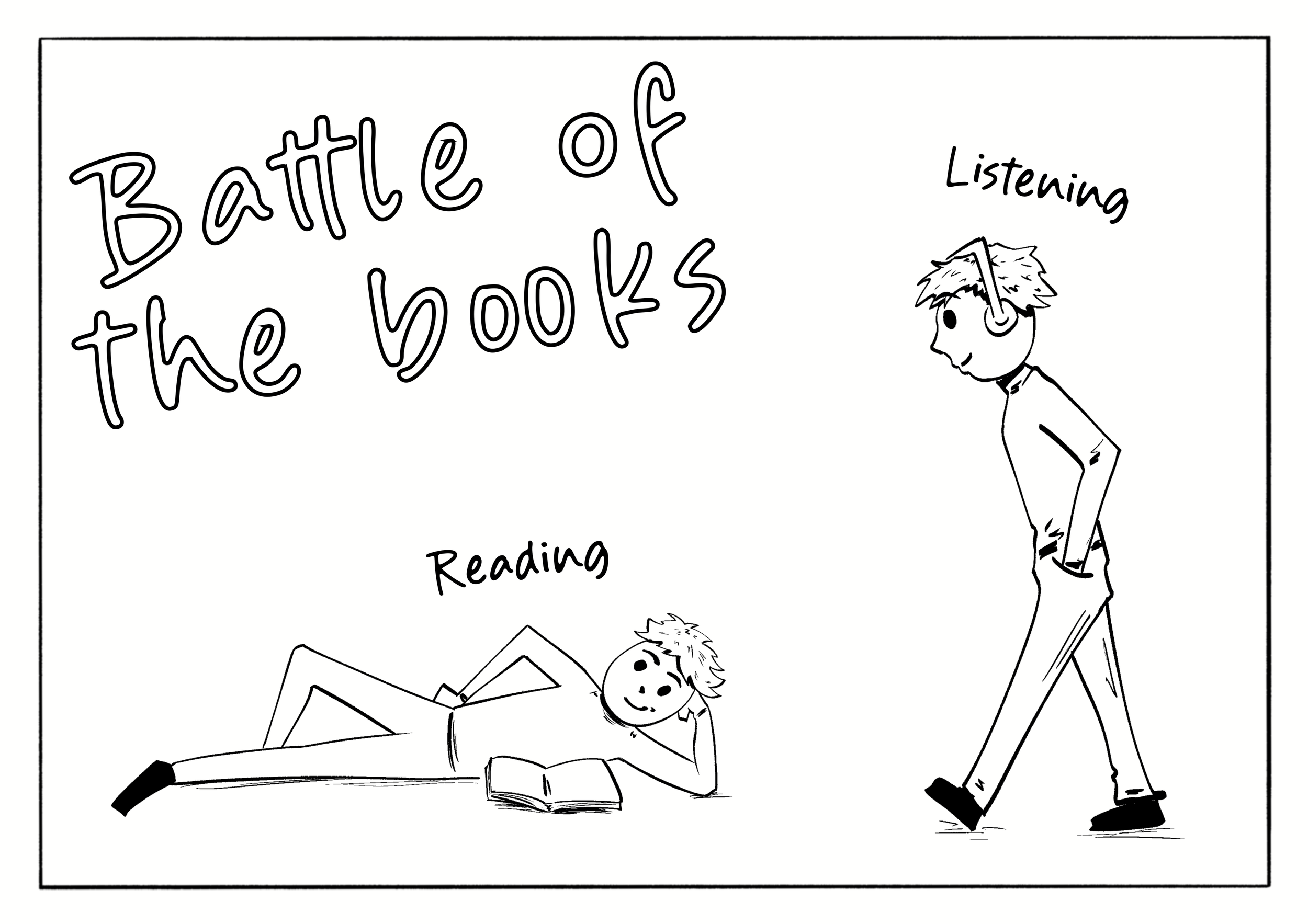
Eventually to be the age old question in a few decades, I haven’t heard much discussion on this topic yet. Of course, reading a physical copy of a book has been centuries and even millenniums of old. It has quite the historic leg up against audio ( or has it?) But will it keep standing against the test of time? Or will the modern day cause it to cease function?
The greatest Invention
Knowledge has created where we are right now. The technology provided in our lives and the growth of the human race has been substantial. Without reading and writing allowing us to pass this knowledge down to our descendants, this growth wouldn’t have been possible to such extent. To surpass life cycles and transcend time, we created a way for a legacy to be stored and live on pass the mortal that discovered or created it. Yes I know, it sounds very grandiose. But don’t we underestimate the invention of this thing? Simple in form but effective in mass.
We’ve governed people through legislation, developed communities through religious following all with the help of the written word. But I solely want to focus on one main thing. Story telling.
Telling a story. The book experience.
As your eyes follow the words on the page, you have nothing but your voice and imagination to accompany you. If you’re lucky, you’ll have something just as noteworthy. Peace. There is nothing quite like reading a good book with no sound in sight but the rustling of each page turn. Feeling the texture of the book between your fingers. The sound is like a thumbs up to you, the book thanking you for continuing on.
There is no rush in reading (not including the dopamine hit.) What I mean to say is, you could read at your own pace. You can pause to ruminate on the scene or a passage. It can help with reflecting on topics. listening to your thoughts for a short while. Once you’ve done so, just hop back into the book. I know you can pause an audiobook but it’s easier to read a passage over and over again with a book.
The problem is when you’re not in such a peaceful environment. Distractions around you can be prominent when reading. It’s hard to stay engaged with the noise of life piercing your bubble of escapism.
The Audio experience
Now I question if reading has the historic leg up because communication through speaking has been around longer. Communication is our superpower, being able to specify things more clearly to our own kind is a strong contender why we’re on top.
I can’t help but think of ancestors sitting by the fire telling stories. An audiobook can tap into that version of history. Instead of you pacing the story, it’s another out of your control telling the story. They guide you and pulling you around on those proverbial strings. If they’re good, they can emphasise and dramatise the story to intensity. Putting you into the thick of it and creating an emotional resonance. A good narrator can enhance the quality of a story. But of course, that means the opposite with a bad one.
Reading is very active, while audio can be passive.
While reading can be susceptible to distractions, it’s a lot harder with audio. Allowing you to log off from the world with consistency. Not only that, it can have a passive nature. Allowing you to do something else whilst tuning into a story. I can recall countless of times I’ve used audiobooks to better serve me doing the chores around the house. However, you can lose the plot (thankfully, not metaphorically), if you zone out too much you’ll lose where you are in the story. But it’s still a net positive in my view. Great choice for those multi-takers (even if it is a myth.)
What’s also good is the versatility of audio. You can have full cast editions, sound effects or even audio dramas themselves. You can be spoilt for entertainment when it comes to audio. But can it provide what books can?
It’s been told that reading strengthens the brain. Developing pathways that increase our processing speed. Language, imagination and reasoning all improve because of it. Not only that, also memory due to all the characters, events and concepts you’re introduced to in this narrative web. Your vocabulary is expanded thanks to prose provided. Vernacular can become more precise.
From enhancing focus to building creativity. There are apparently an abundance of good reasoning to read. There’s also been studies that suggest it reduces cognitive decline and symptoms of Alzheimers. However don’t quote me on that, refer to someone in science for me.
Some of this can be applied to audiobook but it’s not the same. It activates the same regions of the brain, especially in language and imagination. Focus is where it diminishes in an obvious way. But a less than obvious way would be vocabulary, since you don’t get to read the spelling of such words, lessening its impact.
Conclusion
Out in public – audio book. At home – book. Yeah, it feels like a cop out. But it depends on the moment. I do spend more time with audiobooks right now because I’m busy with work, but I can’t ignore the benefits of actually reading. I don’t want to regress on my skills. And I always enjoy those peaceful moments getting engrossed in the pages. I should read more.
What do you prefer? Zen-like moments of a page turning read? Or the sultry sounds of a listening experience?
P.S. Also. Books give us maps. Books win.
