Does Your Personality Decide What You Read And Write?
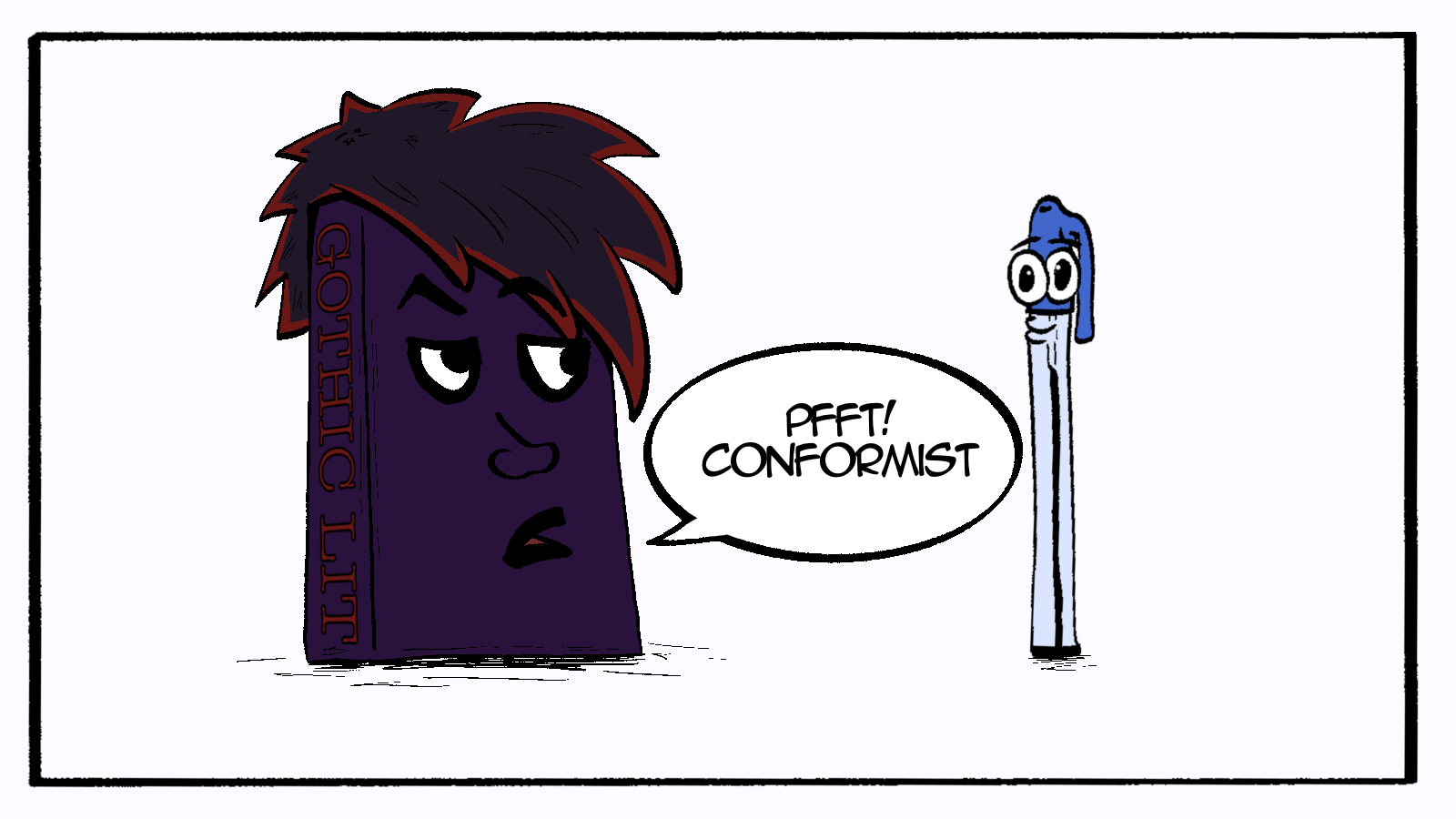
To write is to show a sense of self to the world, so if you have some self-awareness, you can recognise your personality pop up in your story. If your writing is quirky, or stern and direct, I believe it stems from who you are.
So, to go against you and write something not to your strengths, is that a wise thing to do? At the very least I can understand it as a learning experience, and even a worthy challenge.
After all, you never can be so sure what you’re capable without giving it a go. But our personality may shape the type of stories we wish to write? Or even the stories we wish to read? This is what I want to explore. Are we predetermined to write and read specific genres? What happens when we venture from it, or does the venturing out happen anyway but towards a set path pre-coursed?
Below, a study of 386 participant reveals how much personality contributes to your preference in genre.
Hierarchical regressions showed that the Big Five personality traits differentially contributed to predicting media preferences. Results further revealed that even after controlling for the Big Five traits, Machiavellianism predicted preferences for genres of movies and books characterized by intensity, whereas a preference for light books was predicted by narcissism. It follows, then, that both movie and reading preferences can represent a means through which people do express aspects of their own personalities, which may partly explain the importance of entertainment media in our everyday lives.
(PsycInfo Database Record (c) 2025 APA, all rights reserved)
Manolika, M. (2023). The Big Five and beyond: Which personality traits do predict movie and reading preferences? Psychology of Popular Media, 12(2), 197–206.
Are you cynical? Or self involved? This doesn’t really shed a good light on us. But I don’t believe it means to it’s extremes. More that we like to indulge in these perspectives from time to time. We explore our imagination through such media and our personality helps us navigate what we wish to imagine. The dark and intense genres help us understand the dangers and worse possible outcomes. Whilst the lightheartedness give us a sense of joy and wonderment that heals us from intensity. Feels like a balance could be there. But we often lean into one or the other due to our inclinations.
Let’s look at another study.
A set correlation analysis showed that overall the Big Five personality dimensions predicted reading preferences. Openness and conscientiousness in particular were good predictors of four specific types of content preferences. Preference for a certain type of material tended to predict time spent reading that material as reported in the week-long reading log. Further, the Big Five personality dimensions together predicted total amount of recreational reading, amount of reading of favourite material, and amount of non-recreational reading.
UNIVERSITY STUDENT READING PREFERENCES IN RELATION TO THE BIG FIVE
PERSONALITY DIMENSIONS
NICOLA S. SCHUTTE & JOHN M. MALOUFF
Nature vs nurture can be argued with this type of topic. Whether or not what you read is due to the environment around you growing up. This can be certain, since you can only read what you’re exposed to. But will you pick up any book just because you’re exposed to it? Judging a book by it’s cover is precisely what we do to filter out so much choice. The cover catches us and the blurb in the back solidifies our decision. Though overall you cannot read what’s not around, you can just avoid reading if nothing suits your fancy.
Nature on the other hand makes me think of whether you are predisposed to be a reader in the first place. Reading simply isn’t for everyone, and at some point, I would like to delve deeper into this idea. Can it be the same to say you are predisposed towards specific genres? Are fantasy readers born with their first words being Sanderson? Horror gods spawn out King enthusiasts on the regular, whilst thriller babies hop out screaming for their first hit of adrenaline.
Let’s dive into writing.
Students completed a questionnaire about their home, school, and community, and each student was interviewed to verify answers on the questionnaire. The Daly and Miller Writing Apprehension Scale (WAS) was given to determine how students felt about writing, and the Keirsey Temperament Sorter (KTS) was administered to determine personality traits. Two writing samples from each student were analyzed to correlate findings with results from the WAS and KTS, and two case studies were analyzed. Results revealed a significant correlation between writers' attitudes and their personality traits, writing apprehension, and writing background. Eight of the ten students who tested "extraversion" on the KTS were not writing apprehensive. The four students labeled "introversion" in their writing had no difficulty writing as long as it was teacher directed.
How Personality and Background Affect Writing Attitudes.
Hollandsworth, Linda P.
I think most of us have known this before reading. Introverts are more inclined to be writers than extroverts. Our creative endeavours are rarely channeled through social events. The warm cosy solitude of our homes are the base of our writing operations.
I’ve come to terms that personality does play a strong role in our reading and writing habits. Not only that but also what we choose to read and write. Our personalities my shift and alter as we age, and this could also reflect in the changing of what we consume. Ultimately, I believe they go hand in hand in such a strong way, that it’s hard to tell if what we read and write is actually what determines the type of personality we have. Like indicators for who we are. Are we people categorised into genres ourselves? Just using a different synonym.
